Friday, May 18, 2018

"He Said / She Said"

“He Said/She Said”
Written by Erin Kelly
Review written by Diana Iozzia

            First and foremost, I think this book is going to get me back into the British psychological thriller books, and I’m grateful for that. I had heard great things about Erin Kelly and was intrigued by “He Said/She Said”.
            This book has four perspectives, Kit in 1999, Laura in 1999, and both of them in 2015. Kit is an eclipse hunter, bringing along his girlfriend, Laura, for her first time to see an eclipse. At the festival for this eclipse, Laura witnesses a stranger, Beth, being raped and assaulted by Jamie, another stranger.
            We see the story in the past, of Laura and Kit’s battle in the courtroom, to prove that Jamie indeed raped Beth, that it was not consensual sex that looked strange and kinky, as Jamie claimed. Slowly, intertwined with present day Kit and Laura, we unfold the story of the aftermath of Jamie’s conviction. Beth becomes obsessed and clingy to Laura, much to Kit’s dismay.
             In present day, Kit and Laura are expecting twins. Kit is off on an eclipse chase, under an assumed name, hoping Beth has stopped looking for them (Why he’s afraid of her? Of course, we don’t know the whole story yet). Laura stays home and increasingly becomes paranoid, as a video of drunken Kit appears on social media, nearly becoming viral.
            This novel is twisty and intriguing, but it does not pay off with the ending I had expected or wanted. I had a thought in my mind where it could be going, but it seemed to be a red herring, as other reviews have agreed. The twist and climax were not predictable, but they just were not exciting or thrilling. Yes, they were suspenseful and a little surprising, but I was a little underwhelmed with the ending. However, the other 75 percent of the book beforehand was great. I thoroughly enjoyed this, but do not think this book is going to have the shocking, brilliantly concocted twist ending that it’s branded to have. 
* won in a contest held by Minotaur Books on Instagram . *

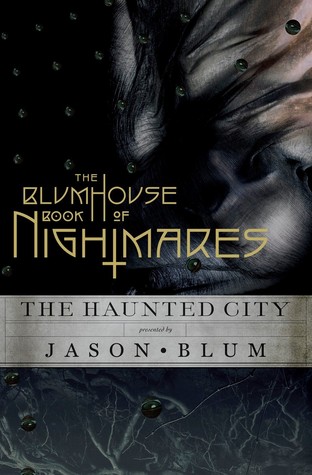
"The Blumhouse Book of Nightmares"


“The Blumhouse Book of Nightmares”
Presented by Jason Blum
A Collection of Short Stories
Review written by Diana Iozzia
The Blumhouse Book of Nightmares by Jason Blum

            Where on Earth to begin? In shopping in the book section of the ever-brilliant Dollar Tree, I found “The Blumhouse Book of Nightmares”. I have been a fan of films created and produced by the Blumhouse production company in the past. My favorites include: “Sinister”, “Paranormal Activity”, and my favorite horror film to date, “Get Out”. I opened up this book and found that the book is a collection of short stories written by Jason Blum’s friends and colleagues, including a contest winner to have a place in the book. Jason Blum had stipulated to each writer that the story they contributed did not need to be of a certain plot, horror, character choice, or fear level. The main stipulation was that each story should take place in a city. Whether that be a fictional or a non-fictional city. By the way, this is not a spoiler free review. But I’m not going to give toooooo much detail in case you do read the book after you read my review.
            To begin, I cannot give a flat answer, “yes, this book was amazing” or “this book was terrible”. Short story collections are often difficult to gauge, because they are often written by various authors. I would say for this, I counted how many stories I loved, how many I liked, and how many I wanted to burn. I am a fan of horror fiction, but not every horror plot intrigues me. I am not afraid of much, aside from falling from literally any height, drowning, dark laundromats, and food that might be saucy or squirt out at you when you try to bite it. So, when I begin reading horror, I look for scary stories that would be great at a campfire, or when you’re trying to creep out your significant other before bed time. I did not expect to hide under the covers or place white sheets over my mirrors.
            “Hellhole” followed a man who is flipping a rotten and destroyed money pit of a home in Brooklyn. I didn’t enjoy the plot or the ending, but the writing style was intriguing.
            “Valdivia” was one of my favorite stories, and after reading this book about a month ago, this story is certainly the most memorable. I was intrigued after I read that the author was Eli Roth, a horror favorite and common colleague of Jason Blum. Our main character visits a strange city in Chile, in which he investigates to find about the rumored Nazi community that once existed there. **

            “Golden Hour” follows two men hunting down predatory monsters in Hollywood. I disliked this story greatly.
            “A Clean White Room” follows a strange landlord who kills tenants for the superintendent. This was absolutely the worst, most boring, and stupidest story in the collection. I know my opinion is subjective, but I hate it and that’s that.
            “The Leap” follows a really strange psychic who has the ability to possess others. This was a story I didn’t expect to like, but I thoroughly enjoyed it in the end. **
            “Novel Fifteen” follows a pompous mystery writer. He’s sweaty and an alcoholic. He’s bored. He’s possibly going to have a mental breakdown. I think this story is more, “you’re driving yourself insane” scary than “ooh, there’s a boogeyman” scary.
            “The Darkish Man” follows a creepy stalker who kills people mysteriously in bars. Umm, nah. Skip this one.
            “1987” was a strange story about homophobia and gay bashing.
            “Geist” creeped me out pretty badly before bed. This follows an urban legend in Munich, in which a man who finds out his lover is a ghost. **
            “Gentholme” was fascinating and a really creative way to tell a story in which a couple accidentally move into a ghost town, with its previous occupants still around... ***
            “Donations” was the short story winner that was entered into this collection. I thought this was completely passable. A city in which people, their body parts, and their possessions are taken by some magical omnipotent, over-being for donations to the city. This sounds like an episode of “The Twilight Zone”, but we’re missing the twist ending, like “Oh, they’re all in a doll house. Oh, they’re experiments made by Sid from ‘Toy Story’”.
            “The Old Jail” follows a man’s descent into insanity. It was really confusing, but I didn’t mind it too much. The narrative is strange, because it’s from the perspective of the man, so the narrative becomes more frenzied as the story progresses.
            “The Words” is about a child psychologist who is struggling to have her young five-year-old trauma patient recover from his tragedy and his mutism.
            “Dreamland” follows a sleep study gone wrong. I can imagine this on screen, whether it be a film or a Black Mirror episode. Pretty good, but also bizarre on many different levels.
            “Meat Maker” was a strange, weird cop chase.
            “Eyes” was completely unmemorable. Even skimming it for a second time just to write up a little bit about it for the review, I remember absolutely nothing from this. It seems like our main narrator is a man who is paranoid a homeless man is following him.
            “Procedure” follows a police investigator who is trying to solve the crime of a rape and attack of a woman. She shows him a secret group of strange surgeons who have found an erogenous zone inside the body, only accessible by an invasive, dark room procedure.
            Overall, my favorite stories were “Geist”, “Gentholme”, and “The Leap”. I think these stories were brilliant, while some of the other stories were lackluster. I would suggest this if you have a wide taste in horror, I think this just proved I’m more of a “ghost story” horror fan.

Monday, April 16, 2018

"S.T.A.G.S."

"S.T.A.G.S."

Written by M.A. Bennett

Review written by Diana Iozzia

S.T.A.G.S.


"S.T.A.G.S." follows our main character, Greer, as she is invited to a weekend away with her new classmates. They all go to a mysterious, historical boarding school with lots of secrets. It's interesting to watch as Greer learn all about the school and her fellow classmates.

Greer and the other two invited students, Shafeen and Chanel are very nervous and uncomfortable. The main events of this weekend include a stag hunt, a pheasant shoot, and a fishing tournament. All too soon, it appears that Greer, Shafeen, and Chanel are the hunted, rather than the hunters. I like the premise of a cult-like boarding school. Not bad.

We have a great amount of foreshadowing, interesting detail, and an unpredictable plot. This reminds me of the films "You're Next", "House on Haunted Hill", and "The Invitation". As for books, this reminds me of "Dead Poets Society", "The Fall of the House of Usher", and "Black Chalk".

I enjoyed this book, but sometimes the language was a little off-putting. Not to say that it was vulgar language: my issue mainly involved Greer's perspective. She's sometimes annoying with her constant film references. I understand she likes movies, but on nearly every page, something happens that reminds her of a movie. She also announces a pretty big plot point that spoils the entire book, within the first two chapters. I would have preferred not to know. I didn't think that knowing in advance had made the book feel more suspenseful and gripping.

It's easy to picture this story, and I liked that it felt vivid in my mind. Also, it doesn't hurt that my favorite place in England is Cumbria and the Lake District, so it was great to have that be its location.

It's funny, upon reading this, I found many fellow reviewers who didn't like this book. I can understand why, this was more of a guilty pleasure read than some gritty, terrifying horror novel. I did thoroughly enjoy it, and I'd like to give it a 4 out of 5 stars. I do think I'll pass it on. I would recommend this, but don't go into the book thinking it will be the next best "Get Out". Although the deer similarities are intriguing...

Saturday, April 7, 2018

"Given to the Sea"


“Given to the Sea”
Written by Mindy McGinnis
Review written by Diana Iozzia / Bookworm Banter

            I received “Given to the Sea” to be a part of the “Given to the Earth” blog tour. After finishing “Given to the Sea”, I am eager to continue on and read its sequel. Naturally, I am writing the book review first, so my opinions don’t become muddled with any plot reveals or character development in the second book.

            “Given to the Sea” is a great first book. It’s very ambitious in its world building, which shows great potential. We have interesting settings, like caves on a beach, the beach itself, the castles our main characters live in, forests, and battlegrounds. I would have liked a map to keep all of this a little more organized in my mind, but if I ever reread the book, I would just draw one on an index card.

            Our main characters are interesting. We follow the perspectives of Khosa, Vincent, Dara, and Witt. We listen through Khosa’s and Vincent’s voices. We follow Dara as she engages with other characters through third person narrative, as well as Witt’s third person perspective. I wasn’t really sure why we read through Vincent and Khosa’s eyes but not Witt’s or Dara’s. I would have appreciated one type of perspective, rather than both first and third person. I always seem to prefer third person. I also don’t really like present tense in writing style, I prefer past.

            Khosa was born of the lineage, in which women are born to breed and then sacrifice themselves to the sea of the kingdom, Stille. The Given are looked at as cursed sacrifices. They are looked after during their lives and protected, out of fear the sea will rise up and flood the kingdom if the sacrifice is not given.

            Vincent is in line to inherit the throne, to be kingdom of Stille. However, he finds himself too involved with his friends and possible romances to be concerned with kingdom duties. He likes to try to mediate between different peoples, but he’s not very good at trusting the correct people.

            Dara and her brother, Donil, are natives, similar to Native Americans. They are called Indiri people. The Indiri have powers to remember the memories and lives of their people who lived before them. Dara and Donil are the last of the Indiri. Donil is a perverted and slightly misogynistic man who tries to use his magical powers of seduction?? (I don’t particularly understand that). Dara is a fantastic antagonist, but Donil could be so much better. He just walks around and flirts, and sometimes fights. I dunno, I don’t really think he’s necessary.

            Witt is the leader of a rebellious group of soldiers who want to conquer Stille. He’s ambitious, cunning, and pretty ruthless. He’s sincerely a good protagonist.

            Let’s move on. What did I think of the book? As I mentioned, the world building is attempted. It can be a bit confusing to remember all of these characters, but I think I managed to get along just fine. I think the main concept of “girl sacrificing her life for her kingdom” is an overused trope in science fiction / fantasy young adult fiction. Is it really necessary to still have characters only have one dimensional problems? She needs to be saved. Or save herself. But do we really need another series where young girls have to run away and save themselves from a whole population of people who want to kill them? This is too present in this genre. I understand that self-sacrifice can be very brave and powerful, but self-sacrifice when it’s forced, it does not feel brave, it poorly reflects the society they live in. I completely understand dystopia. Usually, I am a big fan of the dystopian genre. However, I would absolutely love some new types of dystopian plots that do not revolve around systemic self-sacrifice.

            We are treated to some really interesting parts of this world that I enjoyed. I like in fantasy when we have creatures that the author created for the book. For example, I often enjoy reading The Chronicles of Narnia series, Harry Potter, and more, for the creatures. In “Given to the Sea”, we learn of panther-like cats, called Tangatas. They live in the forests in which Dara and Donil hunt. The tangatas are ferocious and pretty terrifying. However, I don’t forgive books that kill off animals, and the meat was not consumed for food purposes. There are oderbirds mentioned in the woods. We don’t see any incorporated into the plot, just a small mention, but I love the added animals. Other than tangatas, we learn of different types of flora and fauna that are used for medicinal purposes and for food.

            My biggest issue with this book cannot be overlooked. My main problem is the treatment of the Indiri people. As I mentioned earlier, Donil and Dara are Indiri, which is this book’s form of native. Unfortunately, lots of negative stereotypes and tropes are used when these characters are involved. I really enjoyed that Dara has the ability to have the memories of her ancestors and share them, but it is very mystical and a little wacky. In addition, we have the attraction of absolutely everyone to Donil and Dara. It makes me feel a little uncomfortable how irresistible these characters are to other people, considering they are the lower regarded people. I think back to “Pocahontas” or “Schindler’s List”. Why is it that inferior people are so sexy and attractive to other people? Is it the power dynamic? Let’s stop including this trope into books. We even have some of that with “The 100”. It’s eradicated early on, but it still exists. Natives shouldn’t be so irresistibly attractive and pointed out for that. It’s inherent that there’s some type of power balance tipping and makes me dislike the use of this trope in the plot.  In addition, we also have a moment where a character seems to prey on Dara, which is another trope we do not need in young adult fiction!!! Why does every child or teen have to be preyed on?

            To continue, nearly every time we hear Dara’s name, she’s referred to as the Indiri girl. Or her Indiri hair. Her Indiri skin. We get it. She’s a native. It’s constant. By proxy, you wouldn’t have the example, “Dara walked over to the fire and stoked it. The Native American then placed the meat onto the fire.” We can’t just use “she” as a pronoun? Doesn’t that sound slightly strange to you? Well, this happens too often throughout the book. It’s as if the author thought we’d forget Dara’s heritage and has to constantly remind us, “YES, DARA IS THE NATIVE”.  Here are some examples:
“Dissa’s gaze lingers on the Indiri’s skin”. “Unpeeling the Indiri’s fingers from her weapon”. “The Indiri leads his horse on”. “You seem tired, Indiri”.
           
            In conclusion, I think the resolution of this story was great. I predicted it would end a little the way it did, and I’m pleased. I enjoyed the final climax, and I’m intrigued where the story could go from here.

            I certainly recommend this book, but I would err on the side of caution. There can be a lot of moments with uncomfortable sexual treatment of characters, tangata cats die, people die, and I’m not a fan of Dara and Donil’s heritage treatment. I think this is a certainly enjoyable premise. I loved the language. The book felt so vivid I pictured the entire thing as I read along. We received realistic descriptions of characters. The book felt very fantastical, but also like it was a realistic kingdom.

I received a complementary copy for reviewing purposes consistent with Penguin Random House and a blogger book tour.

"The Sunlight Pilgrims"

 The Sunlight Pilgrims Written by Jenni Fagan Reviewed by Diana Iozzia The Sunlight Pilgrims creates an eerie and uncomfortable year 2020 ...